How to Test Your Startup Idea Before Building (Without Burning Time And Money)



Got a startup idea you keep coming back to your mind? Yeah, I bet it's somewhere in your notes app or scribbled on a random piece of paper. It gets you pumped up one minute, then makes you second guess everything the next. Building it sounds amazing until you think about blowing through your savings on something that might totally flop. I've been there, and FYI, this tension never fully goes away. The good news is you can test your startup idea before building without writing a single line of code.
Let me share the validation tactics that saved my ass multiple times about how to do this in a way that actually reduces risk, not just makes you feel productive :)
Why Testing Your Startup Idea Matters More Than Building It
Most founders think building equals progress. TBH, that belief causes more damage than bad code ever could.
The biggest reason startups fail isn't tech. It's building the wrong thing for the wrong people. If you skip validation, you gamble your time, money, and confidence on assumptions you've never checked.
Here's the uncomfortable truth. An idea doesn't become "good" because it sounds smart. It becomes good when real people care enough to react, complain, pay, or at least argue with you. If nobody reacts, that's still data.
Ask yourself this. Would you rather feel awkward talking to strangers now, or feel crushed after six months of building?
The Question You Should Ask Before Anything Else
Before tools, frameworks, or MVP debates, answer this clearly:
Who feels this problem so often that they already tried to solve it?
Not "who might need this someday." Not "everyone." One specific type of person with recurring pain.
When founders tell me "this is for all startups" or "everyone with a phone," I know trouble is coming :/
A good startup opportunity usually shows three signs:
- The problem appears frequently, not occasionally
- People already spend time or money on ugly workarounds
- They complain about it without being prompted
If you can't name these signals, pause. You're not behind. You're being smart.
Talk to Customers Before You Build Anything
Should You Build an MVP or Talk to Customers First?
Yes, before. Not after the logo, not after the landing page, not after the MVP.
Always, Talk first.
An MVP without validated insight becomes a guessing machine. A simple validation flow saves you from analysis paralysis later.
Once patterns repeat and objections become predictable, then an MVP makes sense.
This is also where teams like Innew step in. When founders come with validated insight, not just ideas, building a Minimum Lovable Product in 30 days becomes realistic instead of risky.
How Many Customer Interviews Do You Actually Need?
IMO, 15–20 honest conversations beat 200 survey responses any day.
You're not looking for validation like "cool idea." You're looking for patterns. Similar frustrations. Similar language. Similar hacks they already use.
When you talk to people:
- Ask about their last bad experience with the problem
- Ask what they tried before
- Ask what annoyed them the most
Don't pitch. Don't defend your idea. Just listen.
This step alone answers half the questions entrepreneurs ask before starting a startup.
The Biggest Mistake Founders Make During Interviews
Founders interview their ego, not the customer.
They ask "Would you use a product that..." and get polite yeses. Useless.
Anchor everything in the past. Past behavior beats future promises.
If someone says they'd pay, ask: "What did you pay for last time?" Silence tells you everything.
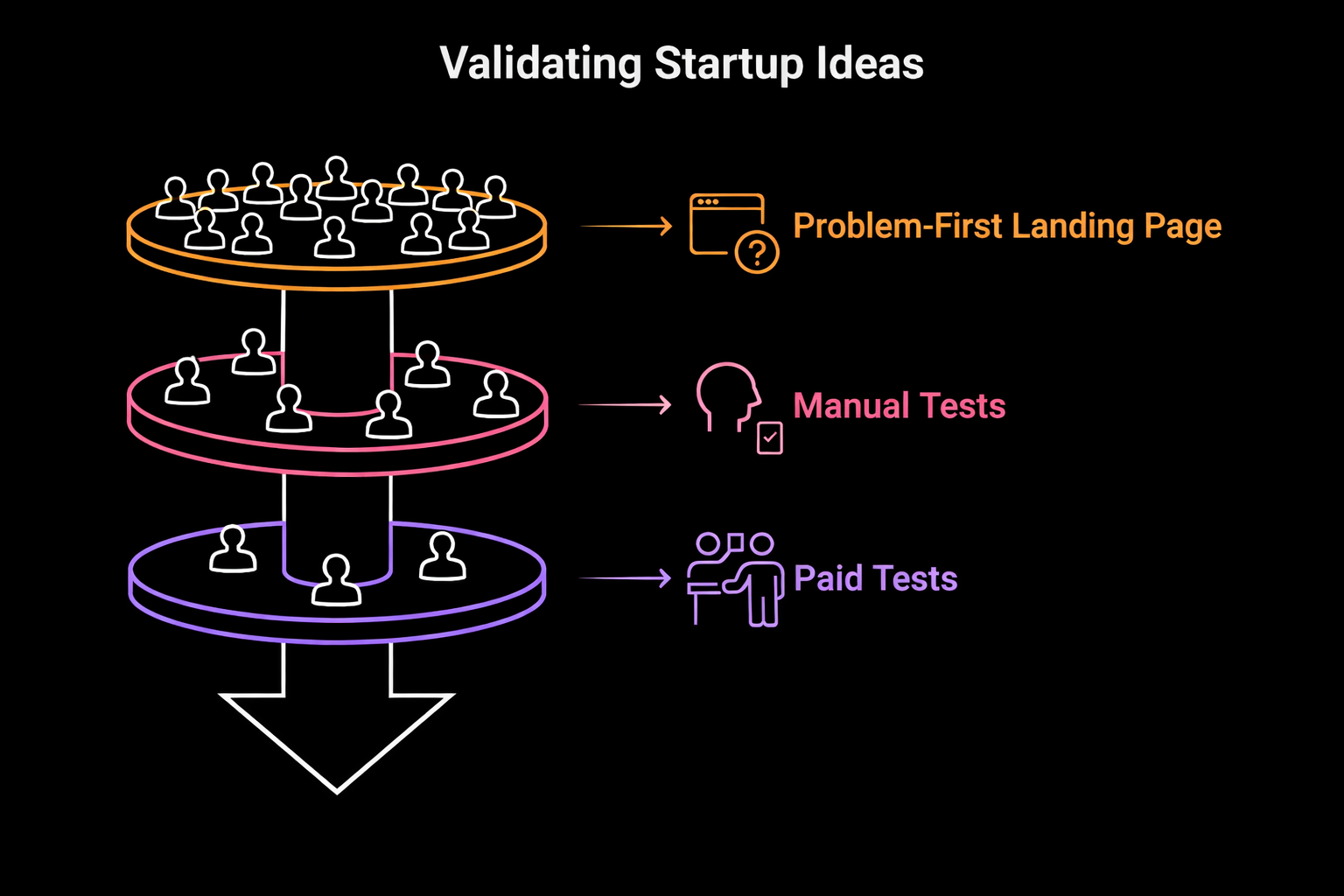
1. The Problem-First Landing Page
Describe the problem clearly. One possible solution. No features. No hype.
Add a CTA: Join waitlist, request access, or book a call.
No clicks? Feedback. Clicks but no conversion? Also feedback.
2. Manual Tests
Pretend the product exists. Deliver manually.
Automate reports? Create them by hand for 3 users. Connect people? Make introductions yourself.
This reveals whether people value the outcome, how painful the workflow is, and what actually matters.
Automation comes later. Learning comes first.
3. Paid Tests
Charge money early. Even small amounts.
It answers the only question that matters: Will someone pay to solve this?
Refund if needed. Your goal isn't revenue—it's truth.
Edge Cases Most Blogs Don't Mention
Let's talk about what usually gets ignored.
Reddit, Indie Hackers, and Honest Pain
Some of the best validation happens quietly. Reddit threads, Indie Hackers posts, and comment sections show raw frustration.
Look for:
- Repeated questions
- Rants about tools
- DIY hacks people regret
These are unfiltered insights, not polished marketing responses.
When to Stop Validating and Start Building
This question causes more stress than it should.
Stop validating when:
- You hear the same problems repeatedly
- Objections become predictable
- People ask "when can I use this?"
You're not waiting for certainty. You're waiting for enough signals to move forward confidently.
Over-validating delays momentum. Under-validating burns resources. Balance comes from experience, not perfection.
Common Startup Validation Mistakes to Avoid
Let's be blunt here.
- Asking friends for feedback
- Confusing interest with intent
- Falling in love with features instead of outcomes
- Ignoring negative feedback because it hurts
Every one of these mistakes feels harmless. Combined, they kill startups quietly.
A Quick Reality Check Before You Build
Ask yourself:
- Can I explain the problem in one sentence?
- Do real people complain about this unprompted?
- Have I seen them try to solve it already?
- Would I feel confident charging for this?
If you answered yes to most of these, I'm pretty sure you're closer than you think.
Conclusion
Testing your startup idea before building is never about slowing down. It's all about moving forward with clarity. Talk to people, test outcomes, and listen harder than you pitch. When signals repeat, building becomes a confident decision, not a leap of faith. So before you open your code editor, are you sure you've listened enough?